
A private casino party does not need to operate at full volume from the moment the first guest arrives. The strongest evenings usually change pace. They begin with space for arrivals and conversation, build into open table play, and finish with a clear final moment rather than fading without direction.
Effective private casino night planning therefore concerns timing as much as equipment. The tables, dealers, announcements, and prizes should support each phase of the evening instead of competing for attention all at once.
Mood One: Let Guests Arrive Before Asking Them to Play
During cocktail hour, the casino area can be visible without being fully activated. A dealer may welcome curious guests, explain how play money works, or run a few relaxed demonstration hands. This gives people time to get a drink, greet friends, and understand the setup before the room becomes busier.
PCMA’s guidance on cultivating connection at events notes that unstructured networking can feel awkward for some attendees and recommends more intentional opportunities for interaction. A lightly active casino table can provide that structure without forcing anyone into a formal icebreaker.
A visible blackjack table rental is useful in this phase because the hands are short and the dealer can explain one decision at a time. Roulette may remain closed or lightly staffed until more guests have entered the room.
Mood Two: Open the Floor and Spread the Energy
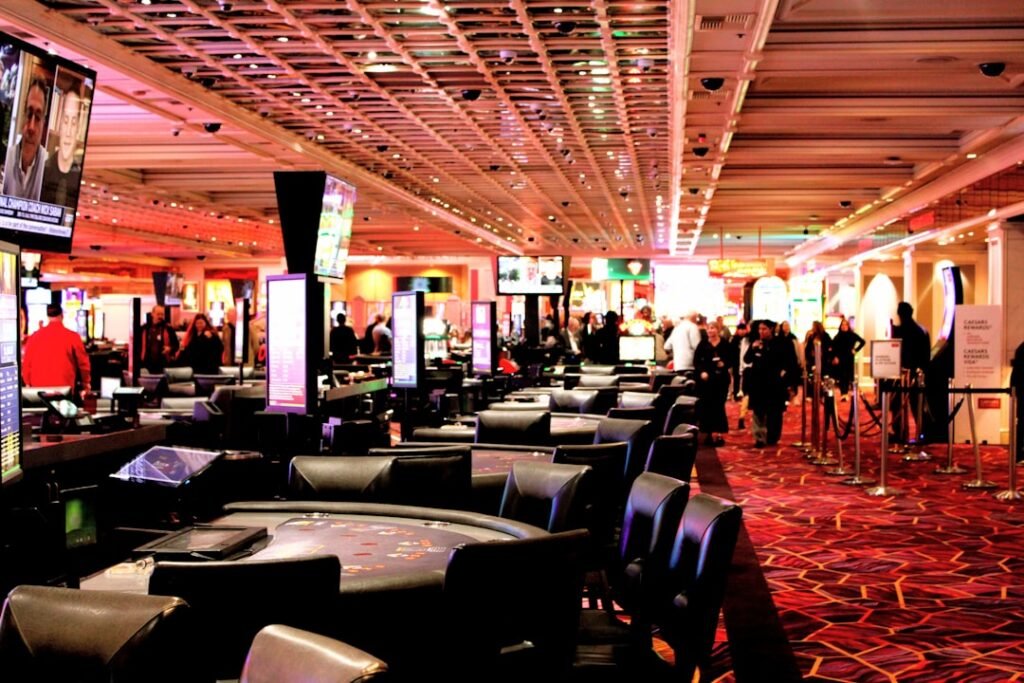
Once dinner ends or most guests have arrived, the event can shift into open play. Blackjack, roulette, and poker should not be treated as interchangeable stations. Each game attracts a different pace and crowd.
A broader casino rental can place quicker games near the social center while positioning poker table rentals where longer play will not block the bar, buffet, or main walkway. Cornell’s room setup guidance describes layouts that allow attendees to circulate between tables while preserving open space for conversation. That principle is especially useful when several casino games become active at once.
The dealers also determine whether the energy feels welcoming or frantic. The U.S. Bureau of Labor Statistics notes that gaming dealers explain rules, answer questions, and rely on customer-service skills. Experienced casino party dealers in New York can invite beginners into the game while keeping the pace moving for returning players.
Mood Three: Give the Night a Finish Guests Can Feel
The final phase does not have to become a long, serious tournament. A short featured round, a last-call announcement for play, or a final chip-count deadline can focus the room without excluding guests who prefer casual games.
For a competitive group, one or two tables can move into a structured poker finale while blackjack and roulette continue for everyone else. Prizes should be explained early enough that guests understand how to qualify, but announced late enough to create a genuine closing moment. Play-money chip totals, raffle entries, or clearly stated tournament results are easier to follow than an improvised contest introduced at the end.
PCMA’s article on mapping an attendee journey emphasizes intentional touchpoints throughout an event. Applied here, that means the ending should feel connected to the earlier play rather than added as a separate attraction.
Plan the Transitions, Not Just the Tables
A successful casino night can hold three different moods without feeling like three separate events. The shift works when hosts decide in advance which tables open first, when the full floor becomes active, how dealers will guide beginners, and what signals the final phase.
Casino Night Party NY can help hosts turn these private casino night planning tips into a practical run of show built around the venue and guest list. Hosts can discuss the event timeline with the planning team before finalizing the table mix, dealer schedule, and closing format.