
A blackjack table near the entrance should not do the same job as a poker table beside the bar. One may welcome first-time players, while the other holds guests for longer conversations and more focused play. For a casino-themed event, choosing the games is only half the plan. A thoughtful casino gaming tables rental strategy gives each table a clear purpose within the room.
Start With Guest Behavior, Not the Number of Tables
Hosts often begin with a list of games, but a better starting point is the guest mix. Some people will approach the tables immediately. Others prefer to watch a few rounds, ask a dealer a question, or join only when friends make space for them.
A visible blackjack table rental can serve as a welcome zone because the hands are short and the basic decisions are easy to explain. Roulette works well as a social anchor. The wheel is visible from a distance, spectators can follow the result, and several guests can react to the same spin. For players who want a longer, more concentrated game, poker table rentals can form a quieter competitive zone.
Give Each Zone a Clear Job
The welcome zone should feel easy to approach, with enough standing room for people who want to watch before sitting down. The social zone should stay visible and lively without blocking the main circulation path. The competitive zone needs fewer interruptions, particularly when guests are playing several poker hands or following a tournament-style format.
This does not mean building hard barriers between games. The zones should feel connected, with guests able to move from a quick blackjack hand to roulette, refreshments, or a longer card game without crossing service traffic or squeezing between chairs.
Placement Determines Whether the Plan Works
A good game in the wrong location can create a bottleneck. Tables placed beside entrances, buffet lines, coat checks, or narrow walkways may collect spectators in spaces that already need to stay clear.
Cornell University’s room setup guidance describes layouts that let attendees walk between tables while preserving open space for discussion and socializing. That principle applies directly to casino parties: the layout should support gathering without turning every gathering point into an obstacle.
Clear routes also make the event easier to use for guests with different mobility needs. The ADA National Network’s temporary-event planning guide recommends continuous, unobstructed paths connecting the areas people need to reach. Table placement should therefore account for access to games, seating, refreshments, restrooms, and exits rather than treating walking space as whatever remains after setup.
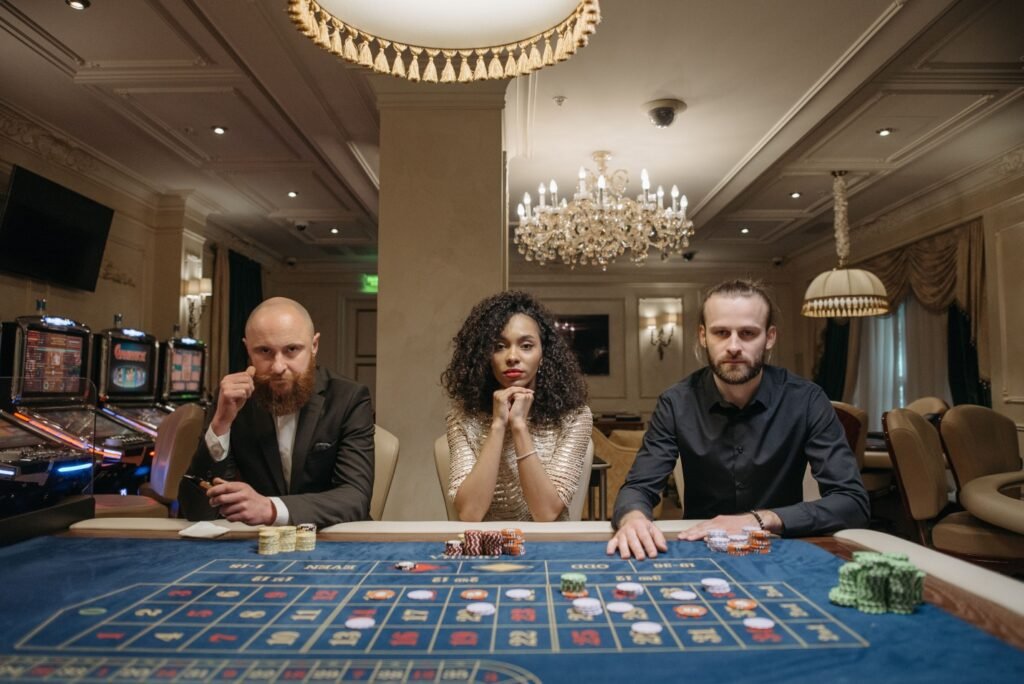
Dealers Help Each Zone Do Its Job
Equipment establishes the zone, but dealers shape how guests use it. Experienced casino party dealers can welcome hesitant players in one area, maintain a faster rhythm in another, and keep a competitive table organized without making the atmosphere severe.
Dealer positioning matters as well. Each dealer needs enough room to manage cards, chips, and guest questions without backing into another table or a busy walkway. When that working space is planned in advance, the games feel relaxed even though the operation behind them is carefully coordinated.
Plan the Floor Before the Tables Arrive
A useful floor plan starts with the guest count, fixed furniture, doors, food service, and the paths staff will use during the event. The table mix can then be assigned around those realities rather than forced into the room on delivery day.
Casino Night Party NY can help hosts match a casino rental to the room, guest mix, and pace of the evening. Hosts can discuss the table layout with the event team before setup so every table has a reason to be where it is.